
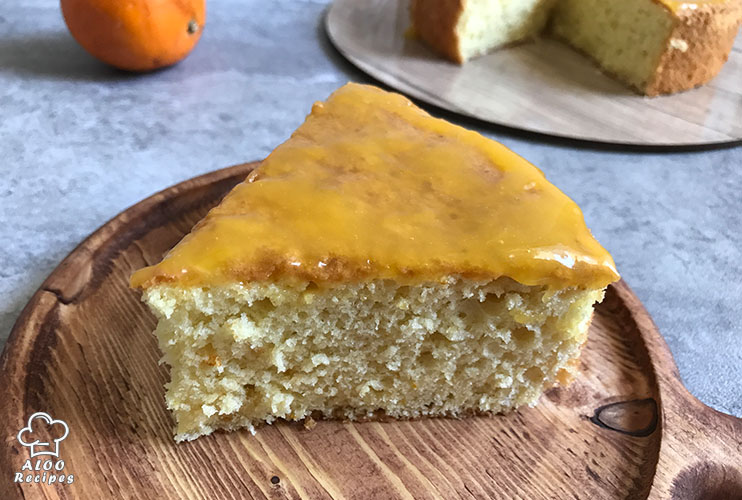
Orange Cake with Orange Glaze
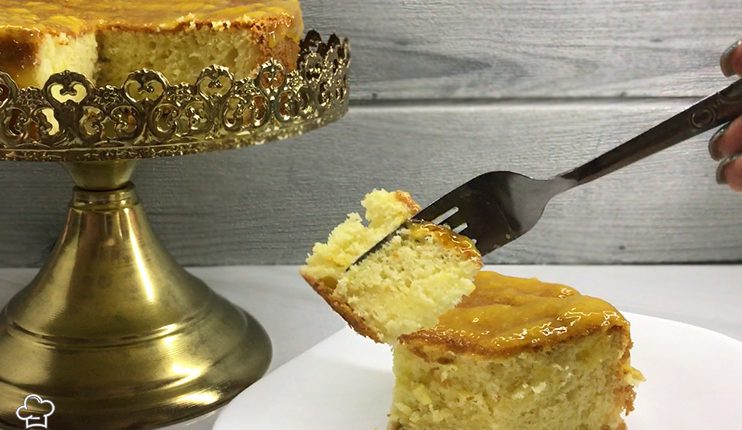
One of the best combinations is orange cake with orange glaze, and I have provided an excellent recipe for it here. It is a cake with a soft and light texture, and the orange glaze poured over it gives it an extraordinary taste. Its aroma is intoxicating due to the presence of orange juice and grated orange zest.
grated orange zest is used inside this cake, which gives it a delightful and exciting orange flavor. Its glaze is also easy. The combination of this glaze with the cake is an excellent and well-thought-out combination.
The result is two-dimensional and exhilarating; I made it for people who didn't like orange cake, and they fell in love with it!
An amazing chiffon cake!
This cake is considered a chiffon cake. In chiffon cakes, in addition to separating the yolks and whites, they also contain oil, while sponge cakes do not contain oil. Sponge cake is very dry and must be creamed to go down the throat. But chiffon cakes can be eaten without cream and icing, so they are suitable choices for birthdays and afternoon tea and even breakfast.
Why should I make this cake?
I won't talk about the taste of this cake any further, as I said, it tastes great. But here I have mentioned reasons why you should make this cake:
- It has a spongy and moist texture.
- It is suitable for creaming as an orange cream cake and for birthdays and other occasions.
- It is an excellent option for breakfast, afternoon tea, and snacks.
- No need for buttermilk, and its fluffiness is achieved just by beating the eggs and adding some baking powder.
- Its glaze is very easy to make.
- The combination of this glaze with the cake is just out of this world!
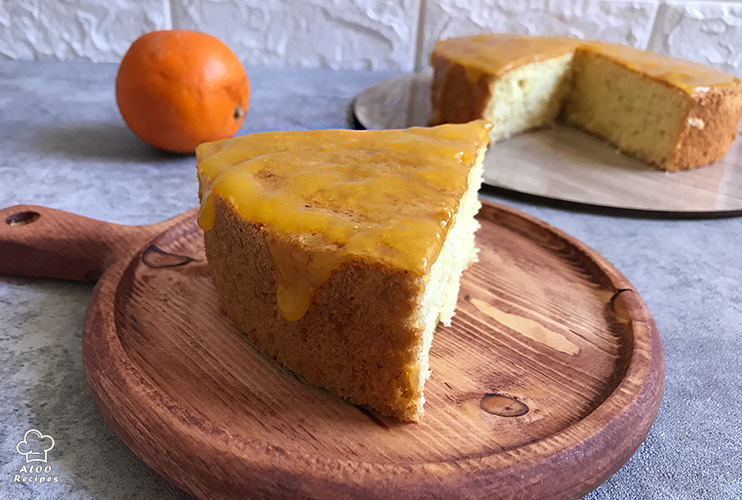
Ingredients for making orange cake with orange glaze:
To make this cake, you need the following initial ingredients:
- Flour: Use cake or all-purpose flour.
- Eggs: The bulk of the cake's texture comes from eggs, which are separated into yolks and whites.
- Sugar: Use granulated sugar. Brown sugar or powdered sugar is not suitable, and when beaten with egg yolks, the ingredients do not volume up.
- Orange juice: You need orange juice to make the cake and its glaze. If it's natural, the result will be excellent, but artificial is also usable.
- Orange zest: An important factor in the aroma and taste of this cake. You need to grate about half an orange. Don't worry that the orange zest will have a sharp taste and bother you. It gives an extraordinary taste to the cake. I have explained how to grate orange zest earlier.
- Oil: This chiffon cake also needs fat, and its fat is with liquid oil found in every home.
- Vanilla: Essential for eliminating the bad smell of eggs.
- Baking powder: Makes the cake rise and puff up. In addition to that, beating the eggs and separating the yolks and whites also makes the cake crumbly.
- Salt: A pinch of salt is to enhance the flavors of the other ingredients you are using.
- Cornstarch: Used for the texture (glaze) of the glaze
- Butter: Used for the shininess of the glaze.
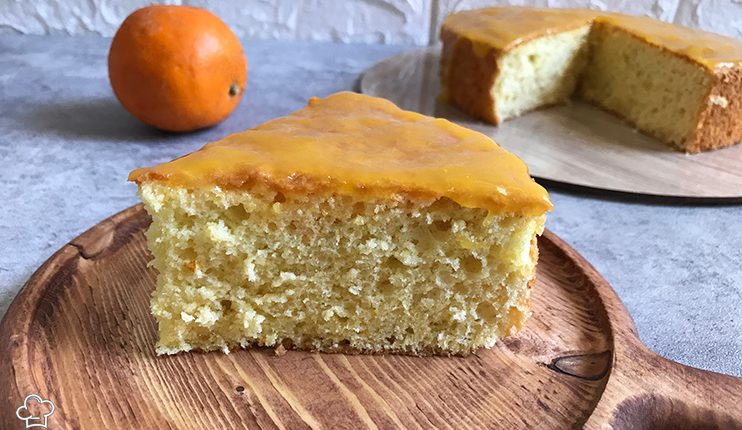
How to make orange cake with orange glaze?
First, you need to make a delicious orange cake. It is easy, does not require buttermilk, and its fluffiness comes from beating the eggs.
To have a Glazed Orange Cake, we need a sauce that perfectly complements the cake. Making orange glaze is very easy. Follow these steps to make this orange cake with orange glaze:
Orange Cake with Orange Glaze Recipe
Ingredients
Cake Ingredients:
- 1 1/8 cups Flour
- 3 Eggs
- ¾ cup Sugar
- ⅓ cup Orange juice
- ¼ cup Oil
- ½ tsp Grated orange zest
- 1 tsp Baking powder
- ⅓ tsp Vanilla
- a pinch Salt
Glaze Ingredients:
- ½ cup Orange juice
- 1 tbsp Sugar
- ½ tbsp Corn starch
- ½ tablespoonful Soft butter
Instructions
Orange Cake Recipe:
- Combine the flour, baking powder, and salt, and sift them together.
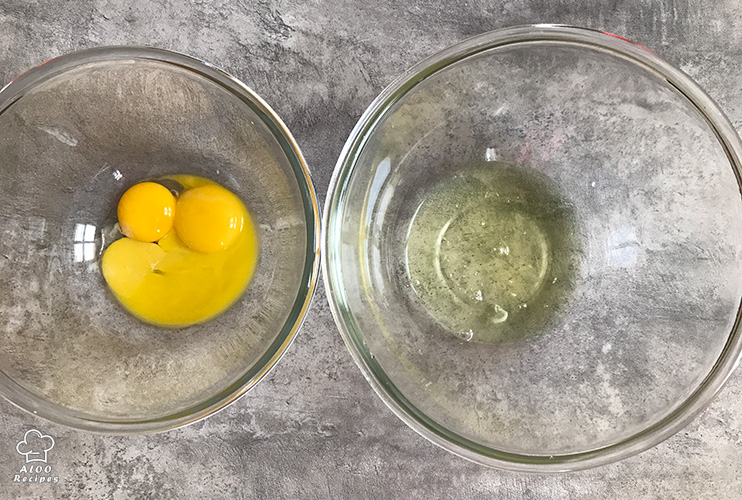
- Separate the yolks and whites of the eggs and put each in a separate bowl.
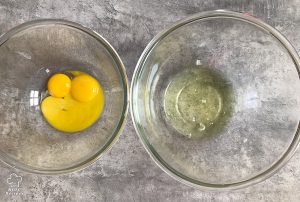
- Separate ¼ of the sugar (for the whites) and the remaining ¾ (for the yolks).
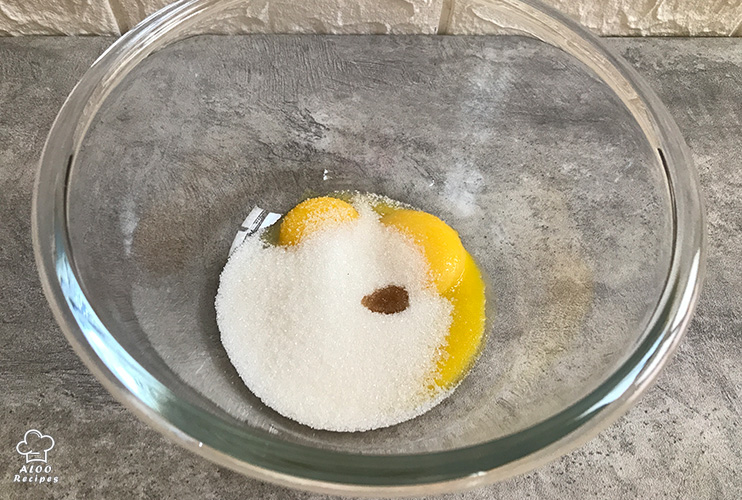
- Mix ¾ of the sugar, yolks, and vanilla together, and beat them with a mixer for about 4 to 5 minutes until they are completely white and creamy. Then set the yolks aside.
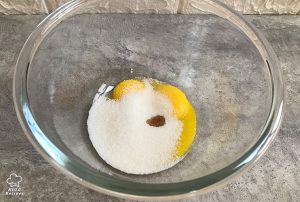
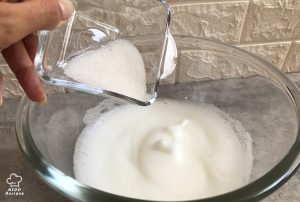
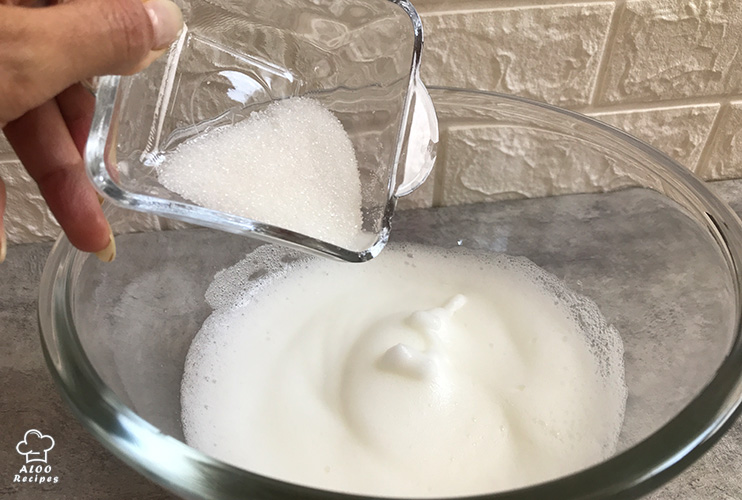
- Clean and dry the beaters of the mixer. Beat the whites with an electric mixer for about 1 minute until they become foamy and white. Add the remaining ¼ sugar gradually to the whites while beating until the whites become slightly firm. Do not beat the whites for more than 2 minutes in total. Set the whites aside.
- Now add the liquid oil to the yolks that were inside a separate bowl.
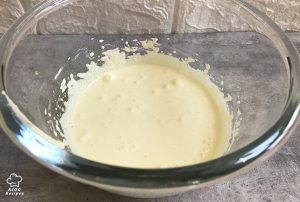
- While the mixer is still on, add the orange juice to it.
- Add the grated orange zest.
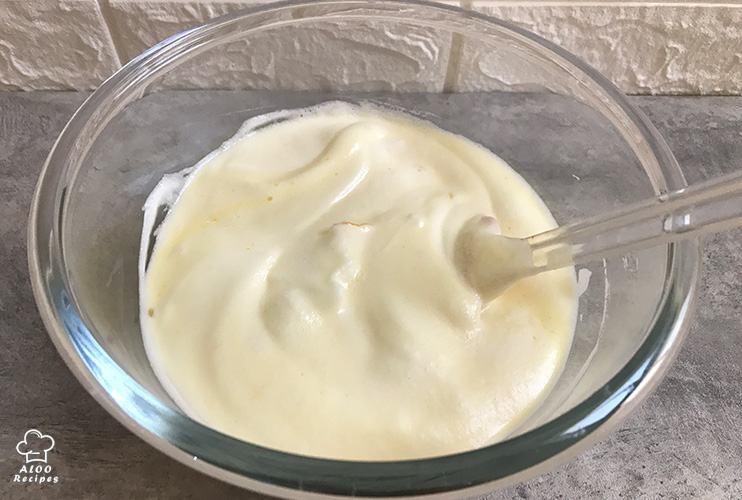
- At this stage, add the beaten whites to the yolks. Fold the whites into the yolks gently with a spatula or a hand mixer (whisk/hand whisk); folding means to bring the whites up gently from the bottom of the bowl and mix them with the yolks; so that the volume of the whites does not deflate.
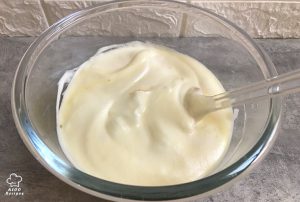
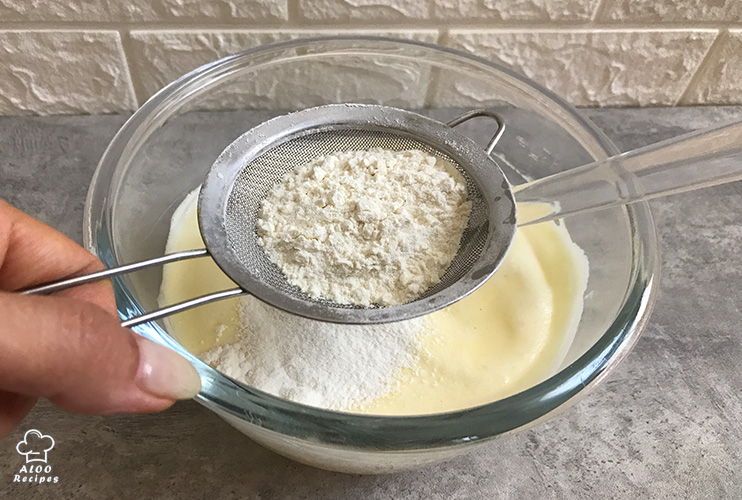
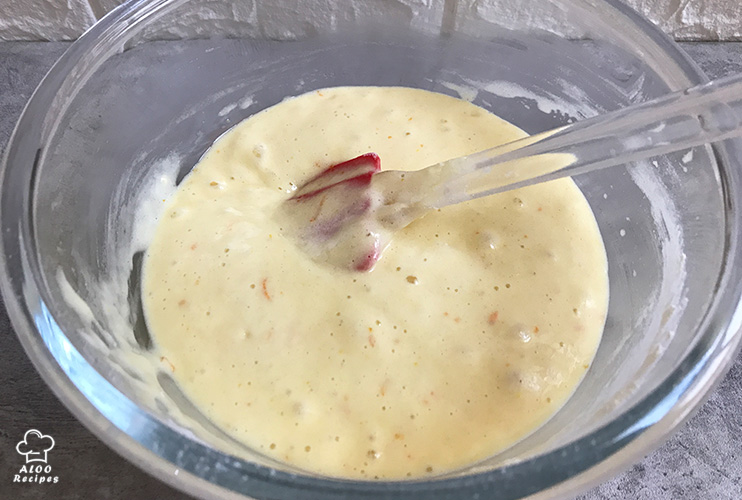
- Add the flour, which you sifted with baking powder and salt, back onto the mixture in two or three stages. Our goal is for the flour to open up if it has clumped together.
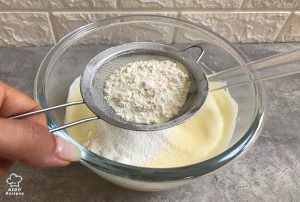
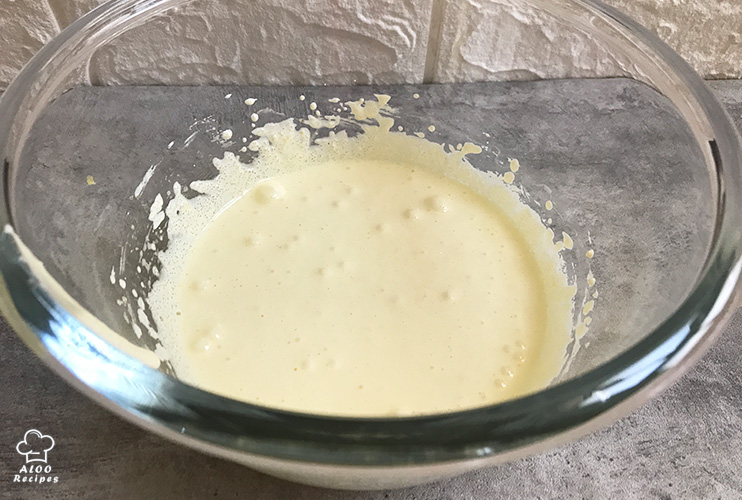
- Batter in the end
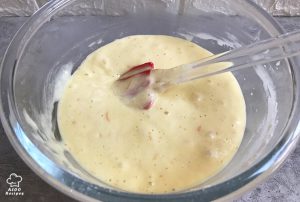
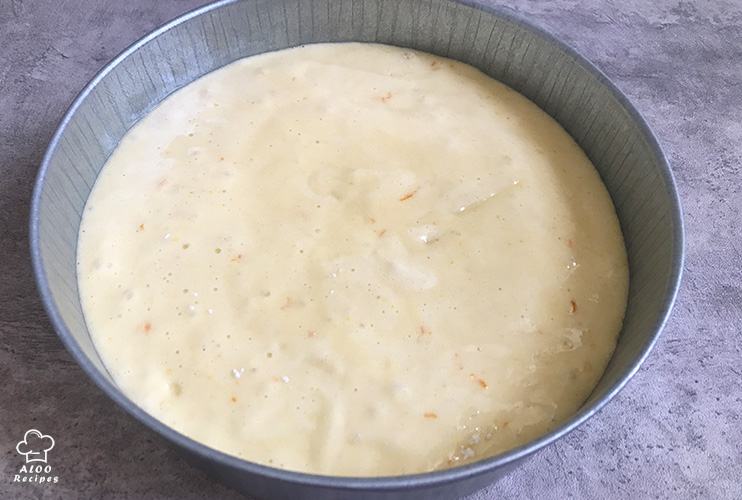
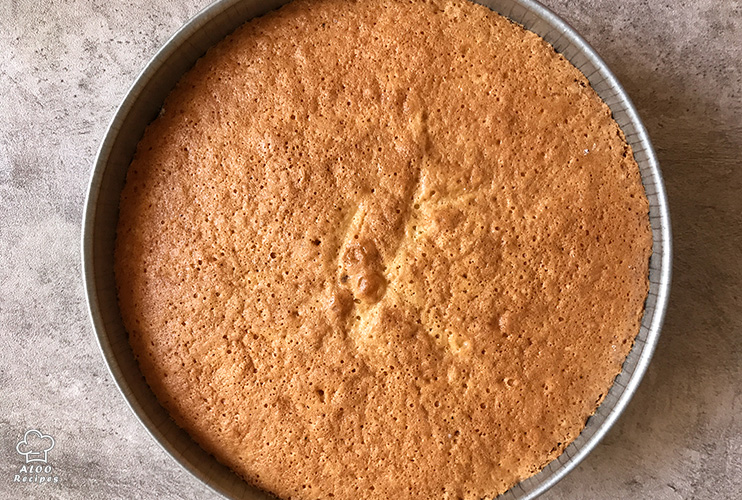
- Place a 20 cm round cake pan with parchment paper on the bottom. Pour the prepared mixture into the pan. Bake in a preheated oven at 180 degrees Celsius for 40 to 50 minutes.
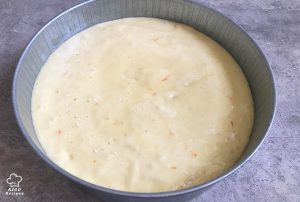
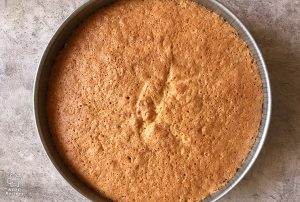
- After 40 minutes, do a baking test. If it is not done yet, leave it for another 10 minutes.
Glaze / Orange Sauce Instructions:
- Mix orange juice, sugar and cornstarch in a saucepan. Mix well and do not let the cornstarch clump.
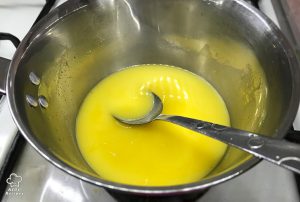
- Place the mixture over low heat. If the heat is too high, the orange juice will burn. Allow the liquid to thicken gradually, like custard.
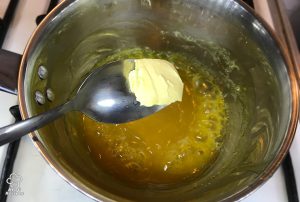
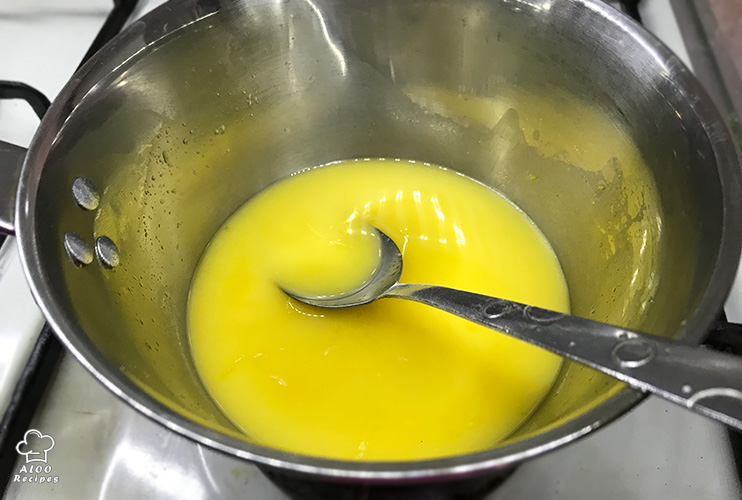
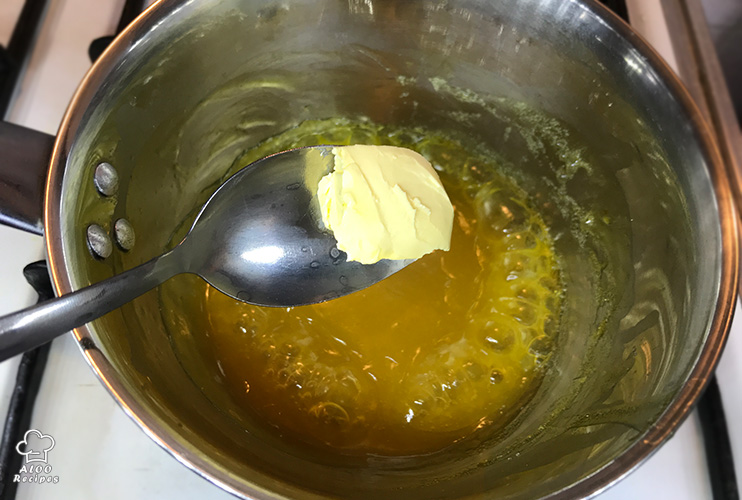
- After 5 to 10 minutes, add the butter and mix well. Remove the orange glaze from the heat and let it cool slightly. It should not cool completely because it will become firm.
After removing the cake from the oven:
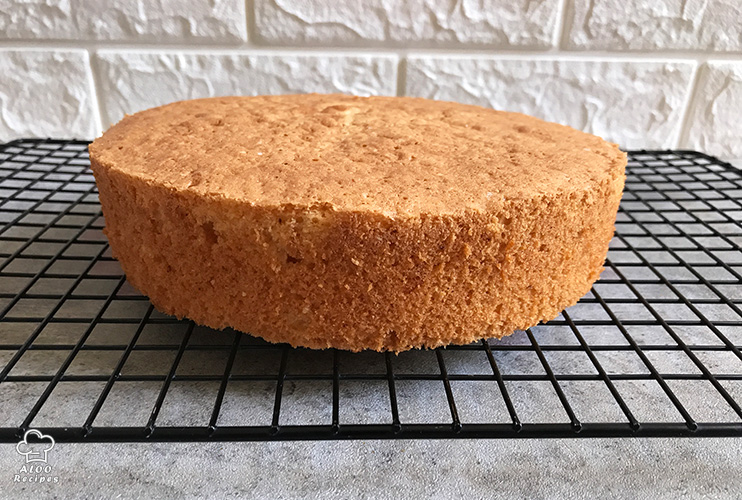
- After removing the pan from the oven, let it cool for at least 30 minutes. Then, separate the sides of the cake with a knife. Place a cooling rack on top of the pan and flip the pan and the rack together. Place the cake on the rack to cool slightly.
Pouring the Glaze on the Cake
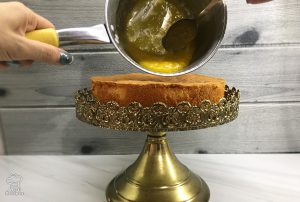
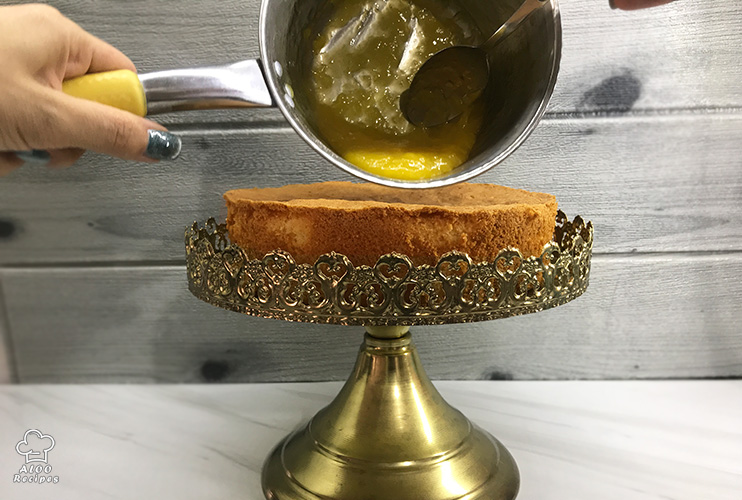
- Place a tray under the cooling rack. Create holes on the surface of the cake with a knife to allow the glaze to penetrate the cake better.After the glaze has cooled slightly, pour it over the cake. Spread the glaze over the surface of the cake and guide it to the edges to drip from the edges. An important point about pouring the glaze on the cake is: neither the cake nor the glaze should be hot, as both will cause the cake to become sticky.
Notes
1. When beating egg whites, no fat or moisture should remain on the beaters, as the whites are sensitive and won't form properly.
2. Try to use natural orange juice rather than artificial.
3. If the orange juice is too tart, use more sugar for the glaze.
4. It's okay to use orange zest in both the cake and the glaze.
5. Remember that you can't just add fruit to any recipe. Some people try to add fruit to a regular cake recipe and think they can easily change recipes, but their cake turns out bad. Oranges and apples, for example, release water, so you can't add these fruits to a regular cake recipe. The orange cake recipe I introduced here is an excellent recipe for an orange fruit cake.
How to Grease the Bottom of the Pan
To prevent the cake from sticking to the pan, it is necessary to use one of the following methods introduced here:
- Place parchment paper on the bottom of the pan.
- Pour 1 tablespoon of oil into the bottom of the pan and then sprinkle 2 tablespoons of flour. Now rotate the pan to coat the entire bottom of the pan with flour and oil.
- Use baking spray to grease the bottom of the pan.
What size pan can I substitute?
If you want to make this cake with the same amount of ingredients in a bundt pan instead of a 20cm round pan, use a 9 x 3-inch bundt pan. Note that if you make this cake in a bundt or tube pan, the baking time will be less, and about 40 minutes should be enough.
How do I grate orange zest?
With a grater, grate the orange part of the peel. The white part doesn't have a specific taste.
Don't worry about the gas in the orange peel; this gas completely disappears during the baking process and gives an excellent flavor to your cake. You can also use lemon or lime zest.
What kind of oranges should I use?
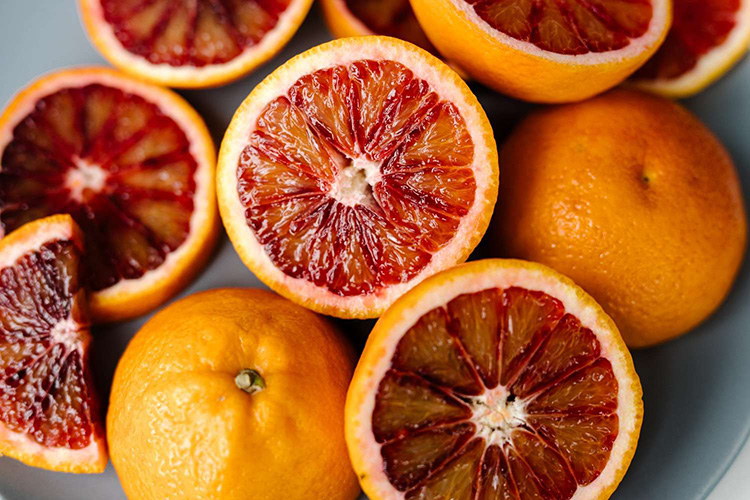
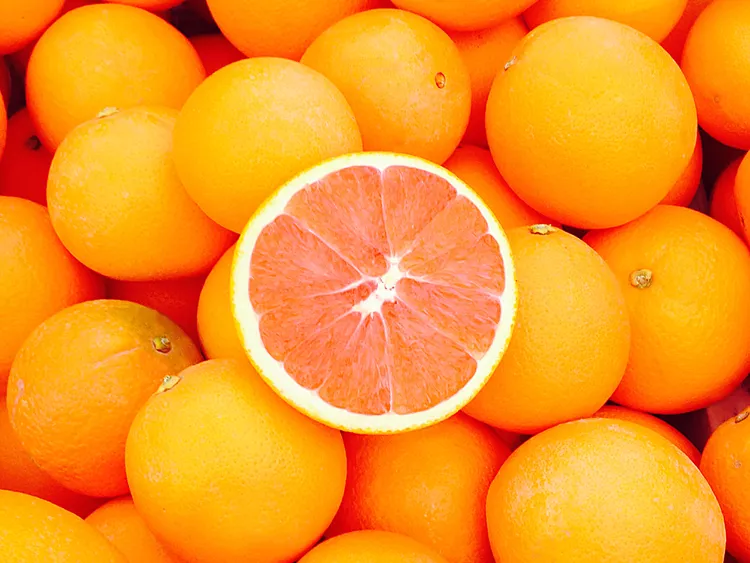
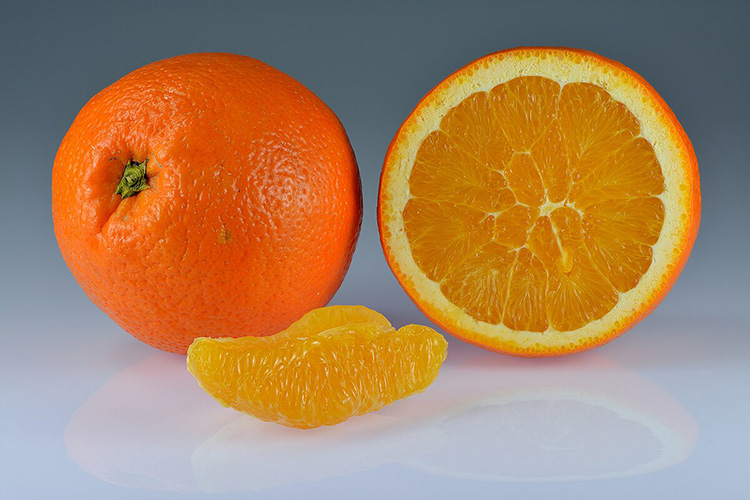
For this orange cake, we need orange juice, and I can say that it doesn't matter what kind of orange you use. However, the following options are the best: Blood oranges (have a deep orange color and give a nice color to the cake), Cara Cara oranges (have a good color), Thomson oranges. Just make sure not to use oranges that are too tart. If you do, use more sugar in the glaze.
Blood oranges:
Cara Cara:
Thomson oranges:
Conclusion
I've seen many recipes for bundt orange cakes glazed with orange glaze, but if you crave a round cake and don't have a bundt pan at home, this recipe is perfect for you.

How can I tell if my cake is baked or not? My cake looked baked on the outside, but when I took it out of the pan, I saw that the middle was still raw.
Hi, Your cake wasn’t completely done. Signs that a cake is baked include a light golden color and the fact that when you insert a toothpick or knife into the cake, it should come out clean.